Best Way to Store Lumber in Garage (Without Warping or Damage)
Storing lumber in a garage might seem simple—until boards start twisting, cupping, or cracking. Whether you’re a weekend DIYer or a serious woodworker, learning the best way to store lumber in your garage is essential to protect your investment and keep your projects on track.
This guide walks you through proven storage methods that help prevent warping, moisture damage, and long-term degradation—using setups that work in real-world garages.
Why Lumber Warps in Garages
Before diving into solutions, it’s important to understand the problem. Lumber warps primarily due to uneven moisture exposure and poor support.
Common garage-related causes include:
Fluctuating humidity and temperature
Direct contact with concrete floors
Inadequate airflow around boards
Improper stacking or uneven weight distribution
Garages often lack climate control, making proper storage methods even more critical.
Store Lumber Off the Floor (This Is Non-Negotiable)
Concrete floors hold moisture—even when they look dry. Lumber stored directly on concrete will absorb that moisture, leading to warping and mold.
Best practices:
Use pallets, 2x4 runners, or shelving
Maintain at least 4–6 inches of clearance from the floor
Ensure the base is level from end to end
This single step dramatically increases lumber lifespan.


Stack Lumber Flat With Proper Support
Horizontal storage is ideal for most boards—but only if done correctly.
How to Stack Lumber Properly
Place support blocks (stickers) every 16–24 inches
Align stickers vertically between layers
Keep boards of similar length and thickness together
Avoid overhanging ends
This ensures even weight distribution and airflow, reducing the risk of bowing or sagging.
Use Stickers to Promote Airflow
Stickers are small, evenly spaced strips of wood placed between boards. They are critical for moisture control.
Sticker tips:
Use dry, uniform strips (¾” to 1” thick)
Keep spacing consistent
Align stickers directly above each other
Good airflow allows lumber to acclimate naturally instead of trapping moisture.
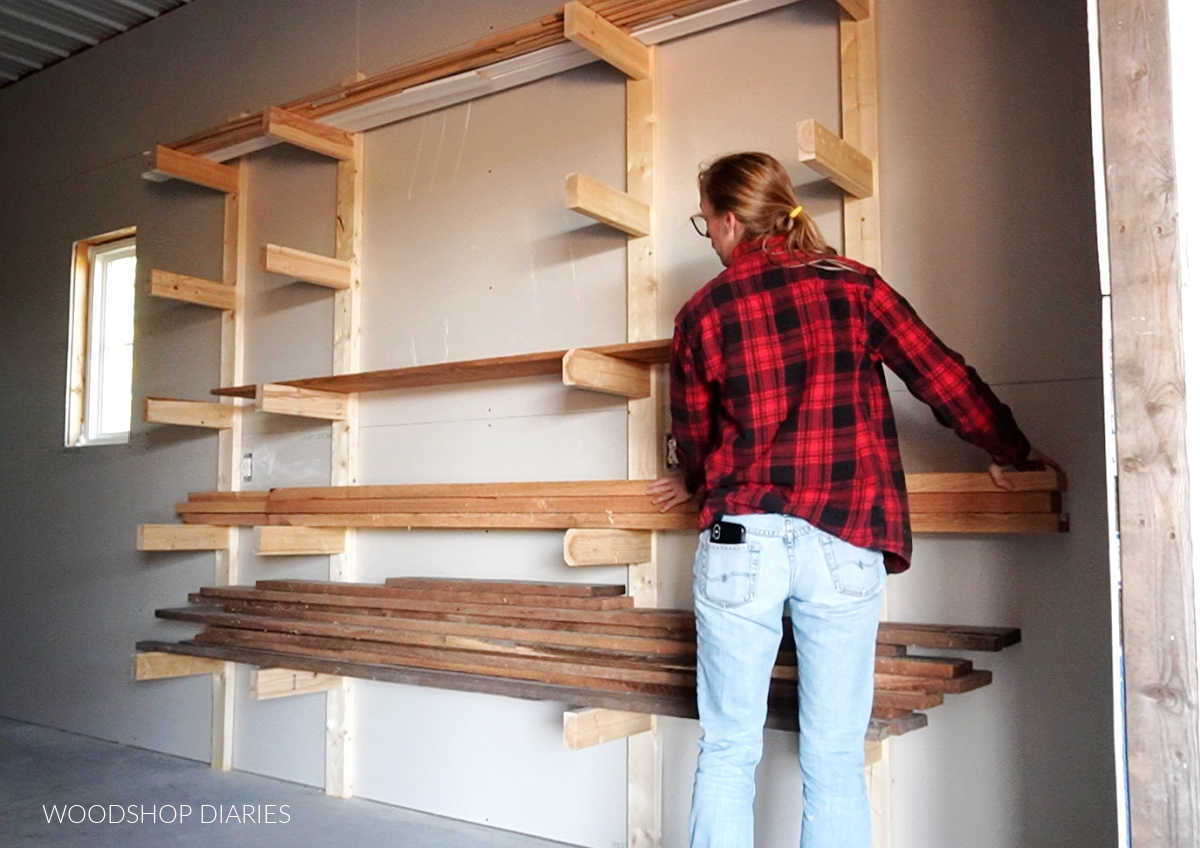
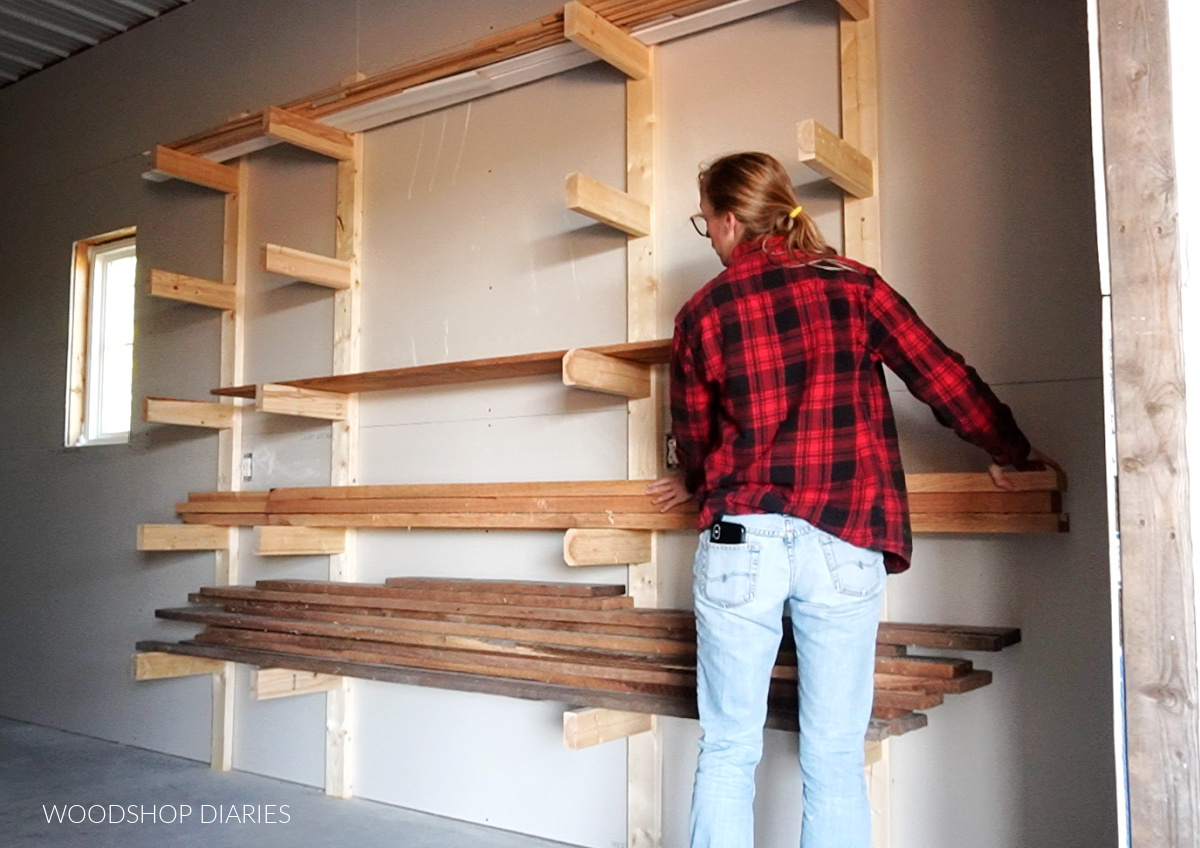
Wall-Mounted Racks: Best for Small Garages
If floor space is limited, wall-mounted racks are one of the best ways to store lumber in a garage efficiently.
Advantages of Wall Storage
Keeps lumber flat and visible
Improves airflow
Reduces clutter
Prevents accidental damage
Ensure rack arms are level and securely anchored into wall studs to prevent sagging.

Control Moisture and Humidity
Even the best stacking method won’t help if moisture levels are uncontrolled.
Moisture Control Tips
Use a dehumidifier in humid climates
Keep lumber away from garage doors and windows
Avoid storing near water heaters or washing machines
Monitor humidity (ideal range: 35–55%)
Stable humidity prevents expansion and contraction that leads to warping.
Store Lumber Flat—Vertical Storage Has Limits
Vertical storage can work only for short periods or with full support.
Avoid vertical storage if:
Boards are longer than 6 feet
Lumber is thin or expensive hardwood
The base isn’t perfectly level
If vertical storage is necessary, ensure boards are fully supported from bottom to top and strapped to prevent leaning.
Keep Lumber Sorted and Sealed
Organization isn’t just about convenience—it protects your wood.
Smart organization strategies:
Group by species and thickness
Label bundles with purchase dates
Keep freshly purchased lumber separate
Use breathable covers (avoid plastic wraps)
Allow new lumber time to acclimate before use or stacking with older boards.
Seasonal Adjustments Matter
Garages behave differently across seasons. What works in winter may not work in summer.
Increase airflow during humid months
Add weight to stacks during dry seasons
Re-check level supports quarterly
Small adjustments can prevent permanent damage.
Final Thoughts: The Best Way to Store Lumber in Your Garage
The best way to store lumber in your garage comes down to three core principles:
Keep lumber off the floor
Provide even support and airflow
Control moisture and humidity
When done right, these methods protect your wood from warping, save money, and ensure your lumber is ready whenever inspiration strikes.
