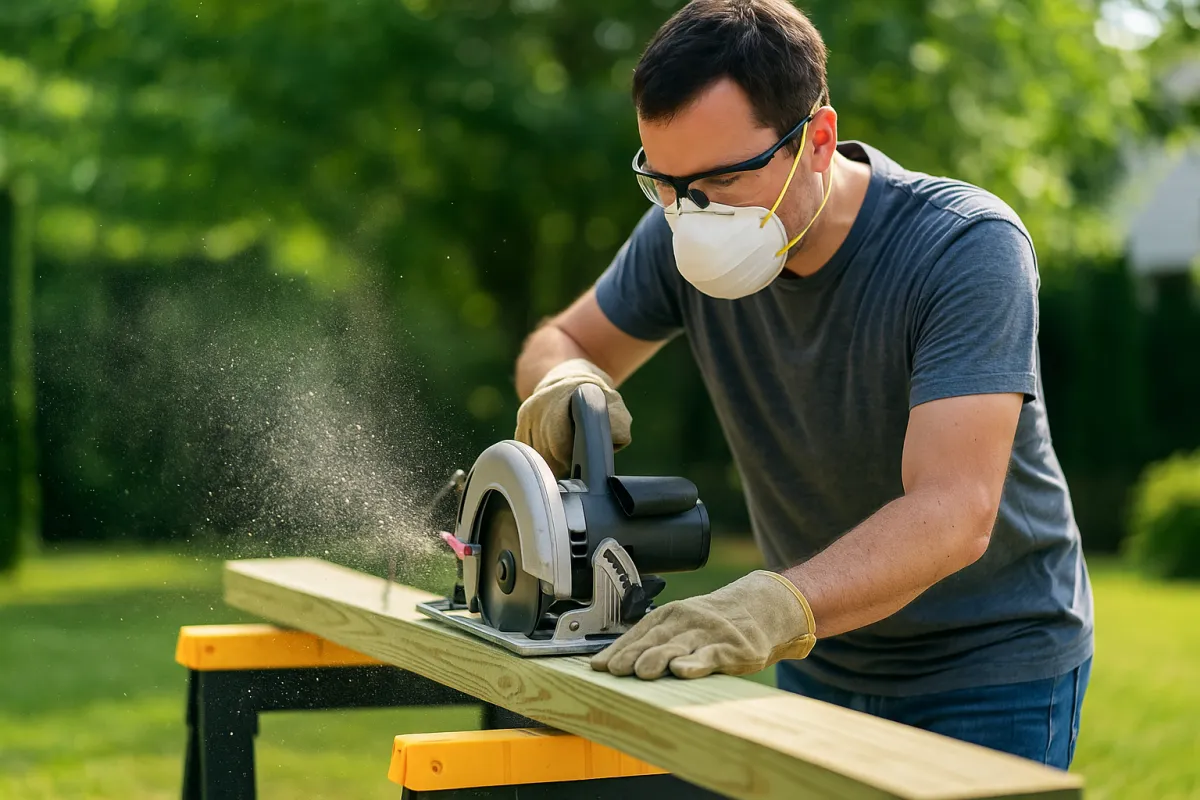
Can You Cut Pressure-Treated Lumber Safely? Tips & Tools
If you’re building a deck, replacing fence boards, or starting a backyard woodworking project, you’ve probably wondered: can you cut pressure treated lumber safely? The answer is yes—but only when you handle it with proper tools, safety gear, and post-cut treatment. Pressure-treated wood is durable and long-lasting, but the preservatives inside it require a more careful approach during cutting.
In this guide, you’ll learn exactly how to cut pressure-treated lumber safely, what tools work best, common mistakes to avoid, and how to keep your finished project protected for years.
Why Pressure-Treated Lumber Needs Extra Care
Pressure-treated lumber is saturated with chemical preservatives like ACQ or MCA, which help it resist insects, rot, and moisture. While these chemicals make the lumber perfect for outdoor projects, they also mean cutting it creates sawdust you don’t want to breathe in.
That doesn’t make the lumber unsafe—it just means you must take precautions. And once you understand how treated wood behaves, cutting it becomes just as straightforward as cutting regular pine or cedar.
Best Tools for Cutting Pressure-Treated Lumber
Some tools perform better than others when working with treated lumber. Although you can cut it with standard saws, using the right blade and equipment gives you cleaner, safer cuts.
Here are the most commonly used tools:
Circular Saw – Best for fast, straight cuts on framing and decking boards.
Miter Saw – Excellent for accurate, angled, and repeat cuts.
Table Saw – Ideal for ripping long boards into narrower widths.
Reciprocating Saw – Great for demolition or areas where precision isn’t critical.
Pro tip: Choose a carbide-tipped blade, as pressure-treated wood dulls cheaper steel blades quickly.
Safety Gear You Should Always Use
Before you start cutting, remember that treated lumber dust is the main concern—not the wood itself. Using protective gear keeps you safe whether you're making a quick cut or working on a large build.
Required safety equipment includes:
N95 mask or respirator
Safety glasses
Hearing protection
Work gloves
Long sleeves
Outdoor or well-ventilated workspace
These simple precautions ensure you can cut pressure-treated lumber without risk to your health.
Step-by-Step Guide: How to Cut Pressure-Treated Lumber
Cutting the wood isn’t complicated once you’re set up properly. Here’s a simple, beginner-friendly process to follow:
Set up the workspace outdoors to avoid dust buildup.
Secure the board on sawhorses or a workbench.
Install a sharp carbide-tipped blade on your saw.
Let the blade reach full speed before touching the lumber.
Cut with steady pressure—don’t force the saw.
Apply end-cut preservative to any freshly exposed ends.
These steps help you achieve smooth cuts while protecting the wood and your tools.
Can You Cut Wet Pressure-Treated Lumber?
Sometimes pressure-treated lumber arrives still damp from the treatment process. You can cut it immediately, but the cuts may appear a little rougher. Wet boards also tend to clog sawdust around the blade.
If precision matters—like when cutting railing or trim—allow the wood to dry for 24–48 hours before cutting. For structural framing, cutting wet lumber is usually fine.
Comparison Table: Cutting Wet vs. Dry Pressure-Treated Lumber
Below is a quick table to help you understand the difference:
Should You Sand Pressure-Treated Lumber After Cutting?
Light sanding is perfectly safe, and in many cases, necessary to remove splinters or smooth the ends after cutting. Just remember: sanding generates even finer dust than sawing, so keep your respirator on and continue working outdoors.
Avoid aggressive sanding, which can remove too much of the protective surface.
How to Dispose of Sawdust and Scraps
One important rule: never burn pressure-treated wood. Burning releases chemicals into the air that can be harmful.
The safest disposal method is simple:
Sweep up the dust (don’t blow it around).
Bag it securely.
Dispose of it with regular household trash, unless your municipality requires separate handling.
Scrap pieces can be tossed the same way.
Final Thoughts
So, can you cut pressure treated lumber without worry? Yes—absolutely. With the right tools, safety gear, and handling methods, it’s safe and easy to cut for any outdoor project. Whether you’re building a deck, installing fence posts, or crafting garden structures, proper cutting ensures cleaner results and longer-lasting performance. And by sealing every end cut, you protect your investment for years to come.
